Looking Back on a Career, Forward to the Future
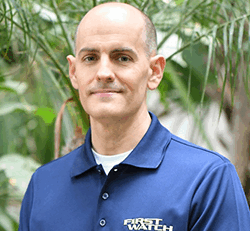
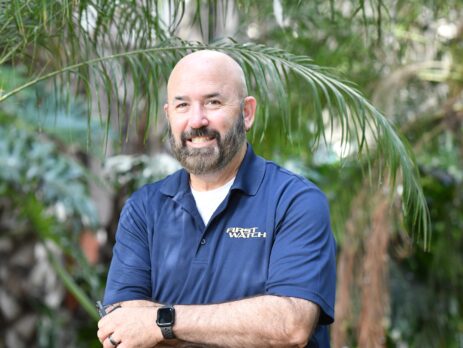
FirstWatch announces Jim Veskerna, after 41 years in EMS, will serve as executive strategist ahead of retirement
By the time he graduated from high school, Jim Veskerna was a certified emergency medical technician (EMT) and California Nurse Assistant.
“When I was 15, I started my first medical class at Lincoln High School in San Diego. I started working at Schaeffer Ambulance Service at 18. They had a rule that you couldn’t drive an ambulance until you were 21, but I challenged that. I was the youngest EMT to ever drive an ambulance there. I guess that’s where my tenacity took hold.”
It’s a tenacity that propelled him through a variety of roles in EMS and public safety technology over the last 41 years. In 2010 he began working at FirstWatch. This year he will be transitioning into retirement, operating as an executive strategist across teams until that time.
“It’s a role that suits me, working across these teams that I know so well,” says Veskerna. “And this way I’m not completely out of the picture at FirstWatch overnight. Our younger leaders are stepping up, but they can also ask me questions.”
“I’ve been able to mentor the next generation of leaders here and now watching them lead is amazing,” says Veskerna. “I’m ready and they’re ready.”
“Some leaders manage teams, while others change the trajectory of the people around them,” says Jake Weaver, director of solutions delivery. “Jim pushed me to believe the next level was always possible. He set the gold standard for putting the customer first, and I’ve never seen anyone build relationships with customers the way he has. Jim is the leader I strive to be.”
Early Start in EMS, Later Start in Life
Veskerna was exposed the thrills of emergency medicine at a young age. You might say helping people when they need it is in his blood.
“My mother was a labor and delivery nurse, then an operating room nurse. Most impactful to me was when she became an emergency department charge nurse,” says Veskerna. “When I started out, it was embarrassing to have my mom call me ‘honey’ on the hospital intercom and then listen to my colleagues make kissing noises. EMS is ruthless.
“Now that I am older, and now that she’s gone, how cool it was having a mom who was a nurse I got to work with?”
Veskerna remembers putting on his EMT uniform with pride to this day. “As a closeted gay EMT in the 80s, the first time I put on a uniform felt like a shield, both from my struggles as a gay person and from my struggles in general,” says Veskerna.
He’s been a proud member of the LGBTQ+ community since coming out in 2000.
“I started my career during the AIDS epidemic,” he recalls. “At the time, it was considered the ‘gay’ disease. Being gay was simply not accepted at that time, and I would later learn that many of my colleagues were actually gay too, they just hadn’t come out yet.”
The bigotry he experienced was mitigated in some part by the good work he was able to do on the ambulance. “When you put on a uniform, you are forced to be an extrovert, which I was not. At all. The uniform also gave me pride. When I drove the ambulance, I would find myself looking at my company patch in disbelief that I was doing this.”
In addition to his responsibilities at FirstWatch, Veskerna has volunteered as medical support at San Diego’s PRIDE events, worked for San Diego’s dispatch center, and volunteered for the American Red Cross.
“It’s been go, go, go,” he says.
The Northridge Earthquake and Traumatic Calls
One of the highlights of his career on the ambulance, he says, was being part of a strike team responding to the Northridge Earthquake in Los Angeles in 1994.
“We didn’t have an LA map, and our radios did not work to communicate with responding agencies,” he says. “I was assigned a nurse as my partner. We went into a severely damaged Long Beach hospital to remove a critical patient. In the elevator on the way down, an aftershock hit. Crazy scary. The hospital already had huge cracks in the structure. We loaded our patient and then someone wrote on a piece of paper how I was supposed to get to the next hospital. With lights and sirens blaring, I headed out into this foreign city – no smartphone, no GPS or Google Maps, in the dark. On a wing and a prayer we made it to the next ICU.”
But the strain of working in such a taxing career, as well as repressing his identity for the first decade of his career, did take a toll.
“I worked nonstop to avoid dealing with my own life,” he says. “I’m almost 60 years old now and I can still remember a bad call from 1986 like it was yesterday. Mental health is less of a taboo nowadays but most people working in public safety don’t have a great work/life balance. Most of us carry a toll to some degree.”
Rebalancing his life after a long and intense career is an essential next step for Veskerna. After a year of helping FirstWatch teams work together and coaching its new leaders, he looks forward to relaxing with his husband, Brian, and focusing on their life together.
His Time at FirstWatch
It’s been a path he wouldn’t trade for the world, he says. The comraderie, the stories, the ability to help people in their worst moments – these carried him in a career that eventually involved working in public safety software, first at American TriTech (now CentralSquare) and then PlantCML (AirBus) and then, in 2010, FirstWatch.
“I have so many highlights from FirstWatch,” he says. “Coming into a company in its infancy was scary but ultimately rewarding. Being a part of this company’s growth and being able to mentor the next set of leaders is amazing.”
FirstWatch has a bright future, he says, and it’s one that Veskerna, who has been with the company for 16 years, has been instrumental in forging. “I can’t wait to see where our new leaders take this company, and how it evolves to meet the challenges of today’s first responders.”