Learning from Whole Blood
Lessons from Montgomery Co. Fire & Rescue Service’s data from this inaugural year
The Montgomery County (Maryland) Fire and Rescue Service (MCFRS) implemented a prehospital infusion program about one year ago. Through a rigorous quality assurance and quality improvement processes, the agency has continuously evaluated and refined the program with data collected during this period.
Following are some of the initial lessons learned.
Know, and Learn From, Your Community
The Montgomery County Fire and Rescue Service is one of the largest combination fire and rescue agencies in the nation, located just north and west of the nation’s capital and serving more than one million residents across approximately 500 square miles. Montgomery County is a relatively safe community operating within a large, diverse suburban-urban EMS system.
Consistent with the emerging national trends, MCFRS initially deployed whole blood primarily for patients with life-threatening traumatic injuries that involved severe bleeding. This approach aligned with early program goals and prevailing evidence supporting prehospital whole blood use in hemorrhagic shock.
“When you read an article about whole blood in EMS, it is often focused almost entirely on trauma,” says Captain Nick Wagner, Quality Improvement Captain for the Montgomery County Fire and Rescue Service and the 2025 Jack Stout EMS Fellow. “We closely followed the excellent work being done in Howard County (MD) and in Washington D.C., where much of the early experience with prehospital whole blood was driven by trauma cases.”
Learn from Those Around You
Wagner notes that close relationships with these agencies were instrumental in getting the program off the ground.
“We’re pretty self-sufficient now, but in the beginning the District of Columbia Fire and Emergency Medical Services Department was a big help, as was Dr. Matthew J. Levy, Medical Director at the Howard County Department of Fire and Rescue Services.”
As the program matured, data and frontline experience revealed broader applications beyond trauma. “Thanks to the clinical judgment and attentiveness of MCFRS clinicians and EMS Duty Officers, we began to recognize appropriate use cases in medical patients, including those with severe gastrointestinal bleeding,” Wagner says. “As a learning organization, we took a step back and recognized that serving an aging population required a broader approach.”
That realization became a key lesson.
Rather than replicating another agency’s model outright, Wagner emphasizes the importance of examining local demographics and historical data to identify additional applications and build a program aligned with the specific needs of the community being served.
Metrics That Matter
To account for these differences, the MCFRS uses the Center for Disease Control’s Social Vulnerability Index to better understand which neighborhoods may be at higher risk during emergencies. The index combines publicly available data such as age, income, housing stability, access to transportation, and language barriers to identify communities that may need additional support or resources. By tracking these factors over time, the department can anticipate emerging trends, adjust deployment and clinical strategies, and ensure programs like whole blood are aligned with where they may have the greatest impact. Sharing this information with external stakeholders provides an opportunity to increase the resilience of our communities by supporting broader safety planning and encouraging the implementation of additional preventive measures.
“We tend to see more trauma-related cases in areas with higher social vulnerability and along high-volume, multilane arterial roads where fast-moving traffic and pedestrian crossings coexists,” says Wagner. “Having that insight allows us to plan more intentionally and advocate for safety improvements that can reduce risk before injuries occur.”
“Given the diversity of Montgomery County, we anticipated that some patients might have religious, cultural, or personal concerns/objections about receiving whole blood, and we prepared our clinicians accordingly,” he continued. “To date, we have not documented a single refusal, but this remains an important part of our training and patient-centered approach.”
Invest in Your People
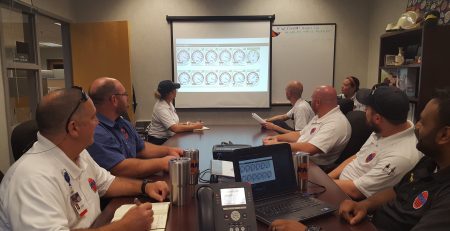
“Our culture is to let our people lead the way,” says Battalion Chief Tony Scott. “We would rather have to throttle them back when necessary than have to push them forward. They have fully embraced the whole blood program.”
“That buy-in is really important, especially on basic life support calls,” says Wagner. “Approximately 22% of whole blood administrations originate from incidents initially dispatched as BLS. Separately, only 26% of whole blood administrations include an EMS Duty Officer on the initial dispatch. In the remaining cases, clinicians independently recognized the need and requested whole blood.”
Because of the forward investment in education and training, MCFRS has seen widespread support for their whole blood program. To date, they have administered 126 units of blood to 101 patients. EMIHS leadership maintains active oversight of the whole blood program by monitoring administration through a Power BI dashboard and utilizing FirstPass to identify and evaluate potential missed opportunities.
Do Your Homework
Scott and Wagner both stress that agencies must fully understand the legal, operational, and clinical framework surrounding prehospital transfusion before initiating a program. “Dive into federal regulations so you get the paperwork right,” Scott explains. “Documentation is really important.”
Numerous state and federal regulations govern the handling and administration of blood products, and EMS agencies are held to these same standards. For example, an information circular must be available for distribution any time whole blood is administered, and it must be provided upon request without delay.
From a regulatory standpoint, there is little distinction between an EMS agency transfusing whole blood in the field and a hospital or transfusion center delivering the same therapy. EMS agencies are required to meet the same documentation and compliance requirements, including maintaining access to the same circulars for information. Because of this, it is critical for any EMS agency administering whole blood to maintain a strong, formal relationship with the supplying blood bank or hospital. That partnership is essential to ensure regulatory compliance and, ultimately, to safeguard patient safety.
Invest in Relationships
MCFRS invested significantly in early outreach to key stakeholders during the development of its whole blood program. From the blood bank and community partners to area hospitals, trauma centers, and surrounding agencies, each stakeholder brought a unique perspective and set of questions. This early engagement has paid dividends over time.
“If we had known there would be so many medical applications, we would have done more early socialization beyond trauma,” said Scott. “It is important that hospital staff and physicians know when we are treating and transporting a patient who is receiving whole blood. We carry whole blood, whereas emergency departments more commonly use packed red blood cells, and that distinction is something they need to be aware of.”
There are six hospitals in Montgomery County, and MCFRS has delivered at least one patient who received a prehospital blood transfusion to each of them. “They have all seen the benefit,” says Wagner.
Blood is a Precious Resource
Given the critical and finite nature of whole blood, the department is highly diligent in tracking each unit, including storage and transport conditions. To date, waste has been rare and has informed continuous refinement of storage, transport, and utilization practices.
One additional lesson we did not initially anticipate was that neighboring jurisdictions began requesting whole blood as a mutual aid resource, “ said Captain Wagner. In Montgomery County, whole blood is carried and administered by one of four EMS Duty Officers, making it a limited and highly specialized resource. For high-volume agencies, this raises an important consideration: does the system have the capacity to temporarily commit such a resource outside its jurisdiction? This experience highlighted the importance of considering regional demand and interagency coordination when developing and refining a whole blood program.
As soon as the electronic patient record is submitted, EMIHS Leadership is notified through a FirstWatch trigger. “We know within a few minutes that whole blood has been administered,” says Wagner. “This marks the beginning of a robust quality management process that includes data collection process and quality assurance, ultimately providing feedback to the crew involved.”
Because blood is a precious commodity, the department sponsors a quarterly blood drive. “We promote it internally, as well as to the police department and the broader community,” says Wagner. One additional benefit for the fire service is emerging evidence that regular donation may help reduce levels of polyfluoroalkyl substances (PFAS), commonly referred to as “forever chemicals,” which are prevalent in firefighters and have been associated with an increased cancer risk.
Community Outreach, Like Quality Improvement, is Never Done
“Educating the public is hard,” says Wagner. “We are still reinforcing fundamentals like the importance of smoke detectors and bystander CPR. In a community this size, questions such as what constitutes an emergency and when to call 911 remain ongoing challenges. Whole blood is now part of that broader, continuous public education effort. “
Each blood administration is reviewed for protocol compliance, and system-level data are routinely monitored to ensure that all eligible patients receive appropriate care. When gaps are identified between intended practice and actual delivery, MCFRS initiates targeted quality improvement projects grounded in data to close those gaps and ensure consistent, high-quality care for every patient. While much of this review process remains manual, the use of FirstWatch triggers allows the agency to aggregate data and gain a more comprehensive view of whole blood utilization across the system.
“At this point, tracking clinical outcomes is manual,” says Chief Scott. “It’s very important work but it takes time to get the patient outcomes. We would like to automate as much as possible through health information exchanges, but the follow-up itself takes office time. Quantifying the impact is essential.”
Invest in What’s Working
Based on the data, the program has demonstrated clear benefits, positively impacting patients throughout Montgomery County. As a result, MCFRS plans to continue investing in and refining the whole blood program moving forward.